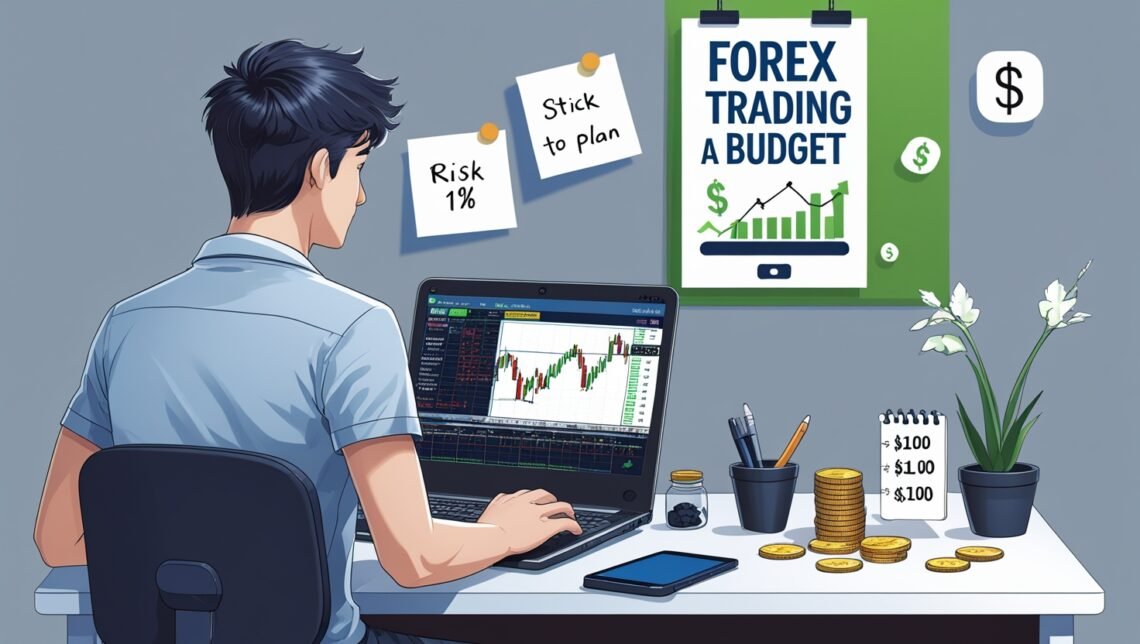
People often consider forex trading to be the work of only those who have a lot of capital, but in reality, this market is open to everyone, even if they have a small amount. If you have limited capital, it does not mean that you cannot trade. You can start forex trading even by investing a little money, but you just need strong planning and a disciplined approach. Forex is a highly liquid and accessible market where many brokers offer micro and cent accounts, where you can get started with just a few dollars. You just need to understand that a small account means that every trade needs to be taken very carefully, and the risk needs to be kept to a minimum.
The success of trading does not depend on the size of capital but on your strategy, patience, and consistency. Often, people fail despite large investments because their mindset and risk control are not right. So if you want to learn trading with a small amount in a disciplined way, you can grow well with time. Starting with a small capital in Forex is a good decision, but you should have realistic expectations. Don’t dream of overnight riches; rather, focus on learning and understanding. This blog will explain to you how trading can be done on a low budget without unnecessary risk.
- Choosing the Right Broker for Small Accounts
When you want to do forex trading with small capital, the first and most important step is to choose a broker that supports small accounts. Not every broker is suitable for traders with small investments, so you have to see what type of accounts the broker offers, such as micro or cent accounts. In these accounts, you can start trading with just $10 or $20, and these accounts are specially designed for people who have a low budget. You should also check the credibility of the broker, whether he is regulated, whether his spreads are low or not, and whether he takes hidden charges. If the spread of the broker is high, then it becomes difficult to make a profit with less capital.
Apart from this, you should also see what leverage the broker offers. High leverage can be beneficial for you, but at the same time, it can also bring high risk, so it is important to use leverage wisely. The trading platform of the broker should also be user-friendly and fast so that you can trade efficiently. Deposit and withdrawal options should also be according to your local needs. Good customer support is also very important for traders with small capital, so that they can get immediate help on any issue. All these factors together lead you to a broker who gives you an opportunity for growth while protecting your limited investment.
- Importance of Risk Management When Funds Are Limited:
When you are trading with small capital, risk management becomes the most important thing. Because you already have limited funds, any wrong decision or overconfidence can take your entire capital to zero. That is why proper planning and risk control are very important for every trade. You should never risk more than 1% or 2% of your total account in any single trade. If you are trading with $100, you should only risk $1 or $2 so that if the trade goes wrong, you can stay in the market and wait for the next opportunity. Using stop loss is mandatory in every trade so that you can control your losses.
Risk management also means that you keep your emotions under control and do not do revenge trading after any loss. Many traders lose their small capital simply because they get emotional due to losses and then take revenge by taking wrong trades, which results in further losses for them. Proper position sizing and keeping realistic targets are also a part of risk control. When you follow smart risk management, you move towards sustainable growth while protecting your small capital
- Leveraging Smartly: Avoiding the Trap of Overleverage
Leverage is a powerful tool of the forex market that can be very helpful for traders with small capital, but if it is not used wisely, it can also cause you a huge loss. Leverage means that you can open a trade of a smaller size with your small investment. For example, if the broker gives you 1:100 leverage and you have only $100, you can open a trade of $10,000. This sounds very good, but if the market moves against you, then your smallest mistake can wipe out all your funds. Overleverage means that you are taking trades that exceed your capital and the risk of which is more than you can afford.
Smart leverage means that you use less leverage, adjust your lot size, and use leverage only in those trades where you are getting a high probability setup. When you keep leverage under control, you keep your capital safe and also avoid market volatility. One should never get greedy while using leverage. Many traders take high leverage just to make quick profits, and then their account gets blown up in a few minutes. That is why using leverage wisely is the best strategy for small capital.
- Budget-Friendly Trading Strategies That Work:
When trading with small capital, you should choose strategies that are low-cost and low-risk and do not require complex indicators. First of all, it is important to understand that you should focus on simplicity. Price action strategy is a very effective and budget-friendly strategy in which you take trade decisions using only charts and candlestick patterns. You do not need any paid signals or expensive tools. Breakout trading is also a good method in which you identify important levels of the market and open a trade when the price breaks those levels. Trend-following strategy is also suitable for small capital, where you trade with the existing market direction and avoid false signals.
You should keep your focus on only 1 or 2 currency pairs so that you can observe their movement deeply. Scalping is also an option, but scalping with small capital can be risky, so if you are new, then work on strategies like day trading or swing trading. Consistency and patience are important with your strategy. You should practice each strategy in a demo account to understand its result, and when you are satisfied, then apply it in real trading. Budget-friendly strategies save you from unnecessary expenses and show you the path to steady growth with your limited funds
- Conclusion:
When you start forex trading with a limited budget, every dollar has value, and its correct use is the secret of your success. Small capital does not mean that you cannot earn a profit; rather, it means that you have to take disciplined, planned, and smart trading decisions. You have to move ahead thoughtfully at every step. Choosing the right broker, using leverage wisely, and strictly following risk management keep you safe. Budget-friendly strategies and focused learning help you grow gradually. Many people fail simply because they either overtrade, misuse high leverage, or enter the market with unrealistic expectations.
Forex trading is a game of patience and learning in which even small account holders can become successful over time if they use every dollar responsibly. It is important to learn from your losses and keep reviewing your plans. This journey can be slow, but if you are consistent, then even small capital can give good results. The purpose of this blog is to explain to you how you can make your place in the forex market through a smart approach despite limited resources. Managing every dollar wisely forms a strong foundation for your trading future
FAQs:
Q1: Can I start forex trading with a small amount of money?
Yes, you absolutely can. Many brokers offer micro or cent accounts that allow you to start trading with as little as $10 or $20. While the returns will be small initially, the goal is to learn, build consistency, and grow gradually. Success in forex doesn’t depend on how much capital you start with but on how wisely you use it through discipline, strategy, and patience.
Q2: What kind of broker should I choose if I have limited capital?
If you’re trading with a small budget, choose a broker that supports micro or cent accounts and has low spreads. The broker should be regulated, have no hidden fees, offer reasonable leverage, and provide a user-friendly trading platform. Also, make sure they have responsive customer support and convenient deposit/withdrawal options suited to your location.
Q3: Why is risk management more important when trading with small funds?
With small capital, you have very little room for error. A single wrong trade without proper risk management can wipe out your entire account. That’s why it’s crucial to never risk more than 1–2% of your capital on any trade, always use a stop loss, and avoid emotional or revenge trading. Smart risk control protects your funds and keeps you in the game long enough to grow.
Q4: What is leverage, and how can I use it safely?
Leverage lets you control a larger trade size with a small amount of money. For example, 1:100 leverage allows you to open a $10,000 trade with just $100. While this can amplify profits, it can also increase losses just as quickly. Overleverage is risky and can destroy small accounts. Use leverage cautiously, only when you’re confident in the trade, and keep your lot sizes small.
Q5: Which trading strategies work best for small accounts?
Budget-friendly strategies like price action trading, breakout trading, and trend-following are ideal for small accounts. These methods don’t require costly tools or complicated indicators. Stick to 1–2 currency pairs and avoid high-frequency strategies like scalping unless you’re experienced. Start by testing your strategy on a demo account, and once you see consistent results, move to real trading with proper risk control.